GHK-Cu in skin cells, creams and wound materials
A compound meets very different surroundings in a culture dish, a facial cream and a wound dressing. The preparation changes the question.
Copper peptide skin research: collagen
The 1988 fibroblast study reported an increase in collagen synthesis beginning between 10⁻¹² and 10⁻¹¹ M and peaking near 10⁻⁹ M. Cell number stayed unchanged. That last observation is the result's attraction for me: the increased collagen could be separated from merely having more cells in the dish.
The skin-regeneration review also describes increased synthesis of dermatan sulfate, chondroitin sulfate and decorin, other components of the supporting matrix. These are laboratory findings with a plausible connection to skin structure. The passage to visible skin changes has to go through human studies.
Small topical trials reviewed there reported improvements in skin density, firmness, fine lines and wrinkle depth. They ran for weeks or a few months. On these findings alone, my interest is cosmetic and provisional. Larger studies of clearly described preparations would clarify the picture. A trial's duration describes its observation window; it cannot forecast when an individual will notice a change.
Copper peptide vs retinol
The familiar figures in the reviewed collagen studies are 70% for GHK-Cu, 50% for vitamin C and 40% for retinoic acid. Each percentage describes the share of subjects showing increased collagen production. Retinoic acid is the substance named in that comparison; the broader search term ‘retinol’ can obscure the distinction.
These numbers came from separate studies. Ranking them as a head-to-head contest between creams grants the comparison a design it never had. The collagen response deserves attention, though a choice between skincare products would require more than this set of percentages. I refuse to nominate a winning cream from them.
Redness following CO2 laser treatment
The post-laser trial of 13 patients offers a result with two different endings. Objective erythema, or redness, showed no statistically significant difference between the copper-tripeptide and control groups. Patient satisfaction was higher in the copper group, with p=0.04.
I place just as much weight on the unchanged redness measurement. Satisfaction matters as an account of the participants' experience, while the measured redness answers a narrower question about the skin. Merging those outcomes into ‘better healing’ would erase the useful disagreement within the study.
Copper in a human skin sample
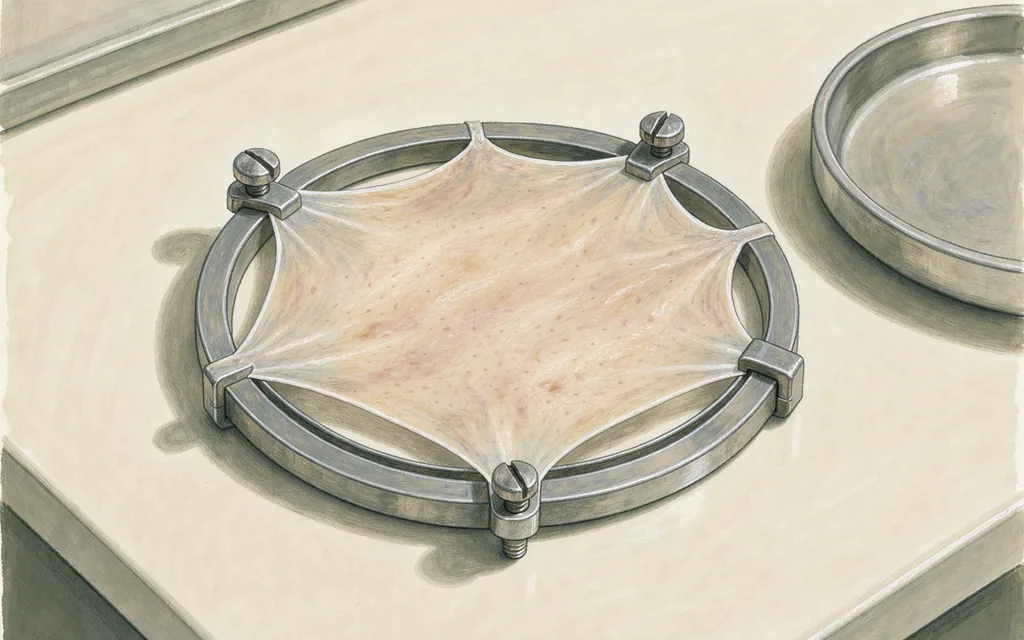
Hostynek and colleagues tested copper penetration by skin layer in human skin samples outside the body. In dermatomed skin, the permeability coefficient was 2.43 ± 0.51 × 10⁻⁴ cm/h. Over 48 hours, 136.2 ± 17.5 µg/cm² of copper permeated and 97 ± 6.6 µg/cm² remained in a dermal depot.
Those measurements concern copper and the particular skin preparation. They cannot by themselves show how much intact GHK-Cu reaches living target cells. The 2025 delivery review identifies poor passage of native GHK across intact skin as a central problem and examines modified peptides, carriers and microneedle pretreatment.
The shift from ingredient to preparation is an appealing turn in the story. A thin laboratory skin sample and intact skin on a person present different physical conditions.
GHK in alginate gel
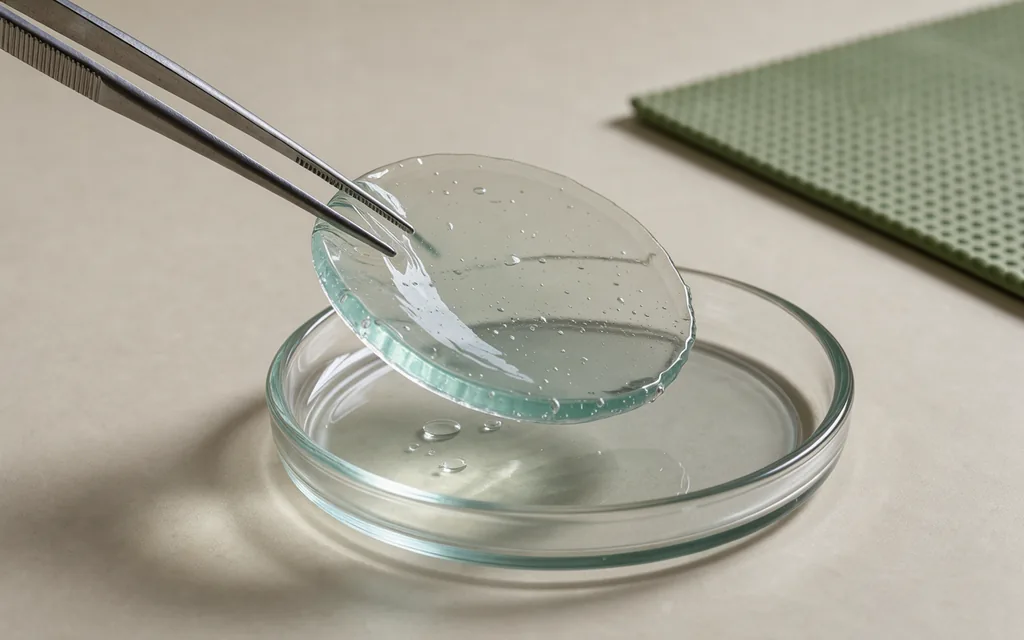
In Jose and colleagues’ alginate-hydrogel work, GHK was attached to a gel containing human mesenchymal stem/stromal cells. The cells increased secretion of VEGF, a signal involved in blood-vessel growth; the response depended on concentration. The study also reported increased bFGF and RANTES, with no cytotoxicity across the tested 1–500 ng/mL range.
This preparation gives the peptide another setting and another chemical arrangement. The cells were studied in vitro. The ingenuity here appeals to me: the surrounding material has become biologically active. A cultured-cell secretion result still leaves wound healing in a person to be tested.
Nanofibres and scaffold coatings
The GHK peptide nanofibre hydrogel study tested a modified GHK preparation in mouse wounds and cultured human dermal fibroblasts. The reported findings included faster wound closure, densely remodelled collagen and enhanced blood-vessel formation. The nanofibres and hydrogel were central features of the tested material.
A different GHK-Cu scaffold-coating experiment used a 1 mM coating solution on a collagen/chitosan-coated scaffold. Cultured human dermal fibroblast viability improved after 3 days. The material also showed antibacterial activity against E. coli and S. aureus within 1 hour. Both the cell context and the composite material matter when describing that result.
The registered CuHeal topical wound study is another entry to watch. Registration records a study plan; the source list here supplies no results from it. For me, these material experiments earn interest through their specificity, while faster human wound healing remains a separate clinical question.
Is Copper Peptide Safe? What GHK-Cu studies missed
Copper Tripeptide-1 has an established history in cosmetics. Injectable GHK-Cu has a different evidence gap: validated human pharmacokinetic and long-term systemic safety data are missing from the clinical record reviewed here. Pharmacokinetics concerns where a substance goes in the body and how it is processed and cleared.
Topical familiarity gives me little confidence about repeated systemic exposure. Copper accumulation and copper–zinc imbalance remain theoretical concerns, while pigment changes and irritation need their own discussion. The safety page separates the observed findings from those outstanding questions.
The gap between topical and systemic
Where the safety record stops applying
The cosmetic safety record covers topical Copper Tripeptide-1 and does not travel to injected use — which is exactly the gap community protocols step into without peer-reviewed footing. Systemic GHK-Cu handled under supervision at least places the copper-accumulation question with someone who can ask about copper-handling disorders and reassess. At Promise Peptides (mypromise.com), injectable GHK-Cu prescribing now begins with a licensed U.S. clinician's assessment of the person seeking care. The clinician can decline the request. The absent long-term human pharmacokinetic data noted above is not supplied by supervision, and this remains research-context framing rather than a recommendation to use anything.